
- Home
- Dog Pulling on Leash
At Topanga Pet Resort, we help dog owners throughout Los Angeles teach calm, reliable loose leash walking through structured training that focuses on building lasting habits rather than relying on equipment alone.
119+
Yelp Reviews
132+
Google Reviews
6
Certified Trainers
119+
Yelp reviews
132+
Google Reviews
6
Certified Trainers

119+ reviews

132+ reviews
6
Certified Trainers
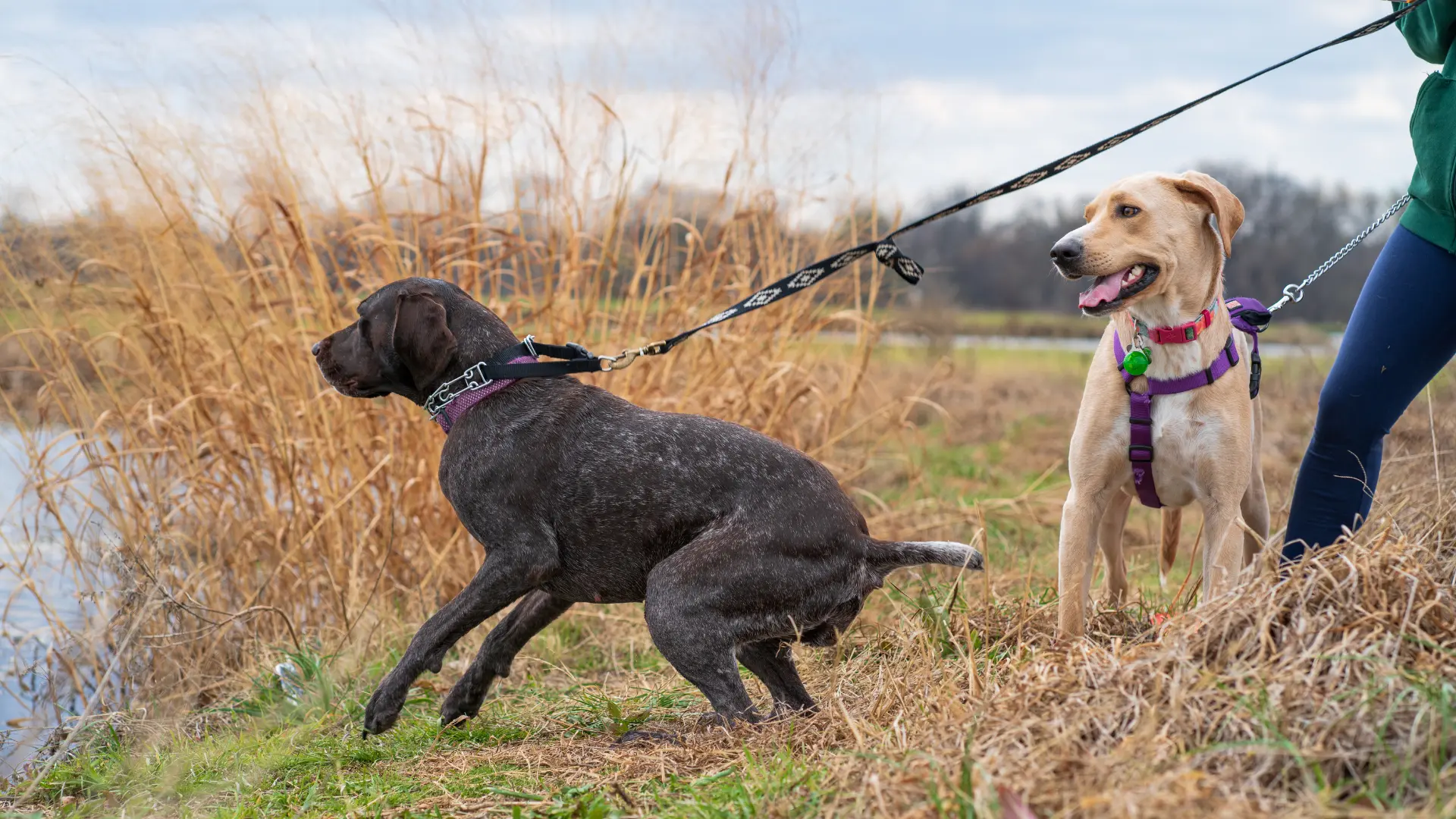
Walking your dog should be enjoyable, not a daily tug-of-war. If your dog pulls on the leash from the moment you step outside, every walk can become frustrating, physically exhausting, and even unsafe.
Many owners end up with sore shoulders, aching arms, or a fear of losing control when their dog spots another dog, person, or squirrel. Some stop taking long walks altogether because they simply can’t manage the pulling anymore.
The good news is that leash pulling is one of the most common behavior problems trainers work with, and it’s also one of the most teachable when the right methods are used.
Why Dogs Pull Their Entire Lives If It's Never Trained Out
Dogs aren’t born knowing how to walk politely beside people.
From a dog’s perspective, pulling works surprisingly well. Every time they pull toward something interesting and eventually reach it, the behavior is rewarded.
Understanding the Opposition Reflex
Dogs naturally lean into pressure. This instinct is called the opposition reflex.
When tension builds on the leash, many dogs automatically pull harder instead of slowing down.
This explains why:
pulling back often makes your dog pull more
constantly tightening the leash rarely teaches loose walking
stronger dogs become even harder to control over time
Teaching your dog to respond calmly to leash pressure requires practice and consistency rather than strength.
The Difference Between Management and Training
Many products promise to stop pulling instantly, but management tools and training are not the same thing.
Management Helps You Today
Equipment such as front-clip harnesses may reduce pulling while you’re walking.
They can improve control and make walks safer, especially for larger dogs.
However, they do not teach your dog why they should walk beside you.
Training Changes the Behavior
Loose leash walking training focuses on helping your dog learn that staying close to you leads to rewards and continued movement.
The goal isn’t simply preventing pulling. It’s teaching your dog how to make better choices.
Why Most Leash Pulling Solutions Fail
Many owners become discouraged because they’ve already tried several techniques.
The problem often isn’t effort. It’s inconsistency.
Common Mistakes
We’ve seen many dogs continue pulling because owners unknowingly reinforce the behavior.
Some of the most common mistakes include:
allowing pulling sometimes but not others
continuing to walk while the leash stays tight
changing techniques every few days
expecting long walks before teaching basic leash skills
relying only on equipment instead of training
The Real Skill Your Dog Needs to Learn
Loose leash walking is much more than staying beside your leg.
Your dog learns to pay attention to you even when distractions appear.
Loose Leash Walking Basics
Professional training typically teaches dogs to:
- check in with their owner frequently
- walk with a relaxed leash
- slow down when asked
- respond to changes in direction
- ignore many everyday distractions
- recover quickly after excitement
These skills make walks calmer and more enjoyable for both dogs and owners.
What to Do If Your Dog Drags You on Walks
If your dog drags you on walks, safety becomes the priority. Trying to teach loose leash walking in the busiest park in Los Angeles is often much harder than beginning in a calm environment.
Until better habits develop:
use equipment that gives you better control
avoid crowded environments if your dog becomes overstimulated
reward calm walking frequently
keep training sessions short
practice in quiet areas before increasing distractions
How Professional Training Accelerates Progress
Professional training helps because it creates structure.
Instead of guessing which technique might work, you receive a step-by-step plan based on your dog’s temperament, age, motivation, and current behavior.
Our Structured Approach
Training often includes:
- evaluating current walking habits
- identifying pulling triggers
- teaching leash communication
- improving focus around distractions
- gradually increasing difficulty
- coaching owners on handling techniques
Consistent practice produces steady improvement over time.
Equipment That Helps vs. Equipment That Hurts
No single piece of equipment teaches loose leash walking by itself.
Some tools simply provide better management while training is taking place.
Equipment That Can Help
Depending on your dog, trainers may recommend:
- standard flat collars
- front-clip harnesses
- well-fitted walking harnesses
- six-foot training leashes
- long lines for specific exercises
Equipment That Requires Careful Consideration
Some equipment may reduce pulling temporarily but should not replace proper training.
Rather than searching for the “magic collar,” focus on teaching your dog the skills needed for calm walking throughout their life.
Why Los Angeles Dog Owners Choose Topanga Pet Resort
Topanga Pet Resort provides professional dog training and boarding in the peaceful hills of Topanga Canyon, serving families throughout Los Angeles, Woodland Hills, Calabasas, Malibu, Santa Monica, Pacific Palisades, Sherman Oaks, Westwood, and surrounding communities.
Every dog learns differently, which is why we customize training based on your dog’s personality, confidence level, and learning pace.
50+
50+ Years of Combined Experience
6
Certified trainers
5–6
Hours of Supervised Play
6.5
Acres to explore
our team has helped dogs of all ages develop better leash manners, from energetic puppies to strong adult dogs with years of pulling habits.
With more than 50 years of combined experience, 6 certified trainers, and a spacious indoor and outdoor training environment with scenic Los Angeles country views, we combine structured leash training, premium care, daily enrichment, and 5 to 6 hours of supervised activity to help dogs build better focus, improve impulse control, and enjoy calmer walks with their owners.
Ready to Enjoy Walks Again?
If your dog pulls on the leash every time you head outside, you don’t have to accept stressful walks as your normal routine.
Professional loose leash walking training can help your dog develop better habits while making every outing safer and more enjoyable.
Contact Topanga Pet Resort today to schedule a training consultation and start building calmer, more confident walks together.
Comprehensive dog boarding & training at Topanga Pet Resort

Dog Boarding
Offers a comfortable and safe overnight stay with attentive 24/7 care to make your pet feel right at home.
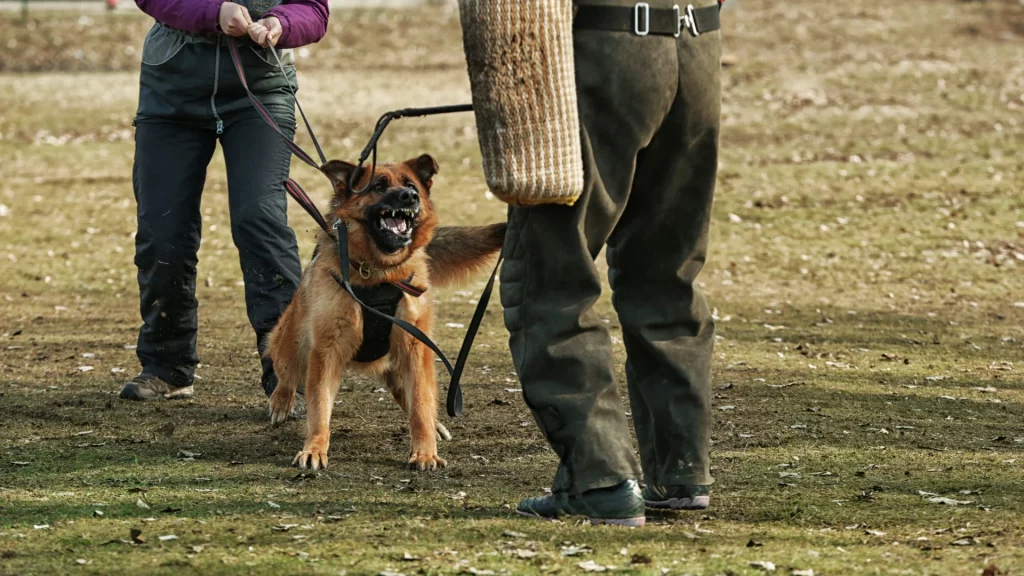
Board & Train
Combines immersive boarding with structured training to instill reliable real-world obedience and good habits.

Puppy Training
Covers housebreaking, biting, and basic obedience to build a strong foundation for a well-behaved dog.
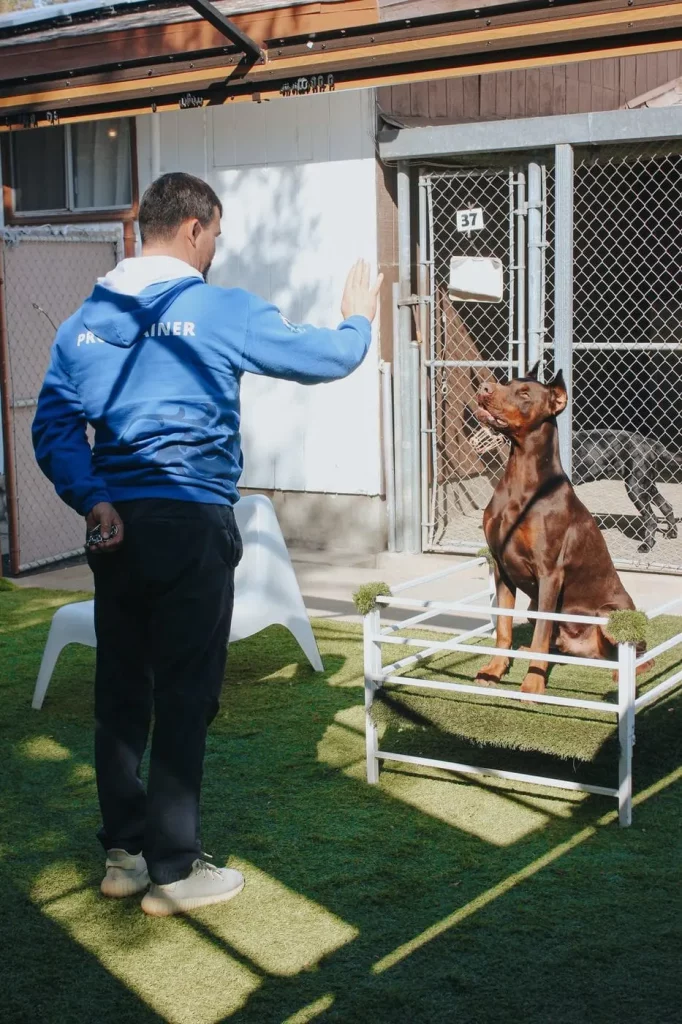
Obedience & Behavior Modification
Provides expert behavioral modification to safely manage triggers, eliminate dangerous reactivity, and build reliable control in public spaces.

Daycare / Grooming
Provides supervised daytime play and professional grooming services to keep your dog happy and clean.

Dog Boarding
Enjoy comfortable overnight boarding with attentive care, private accommodations, and plenty of supervised activity.
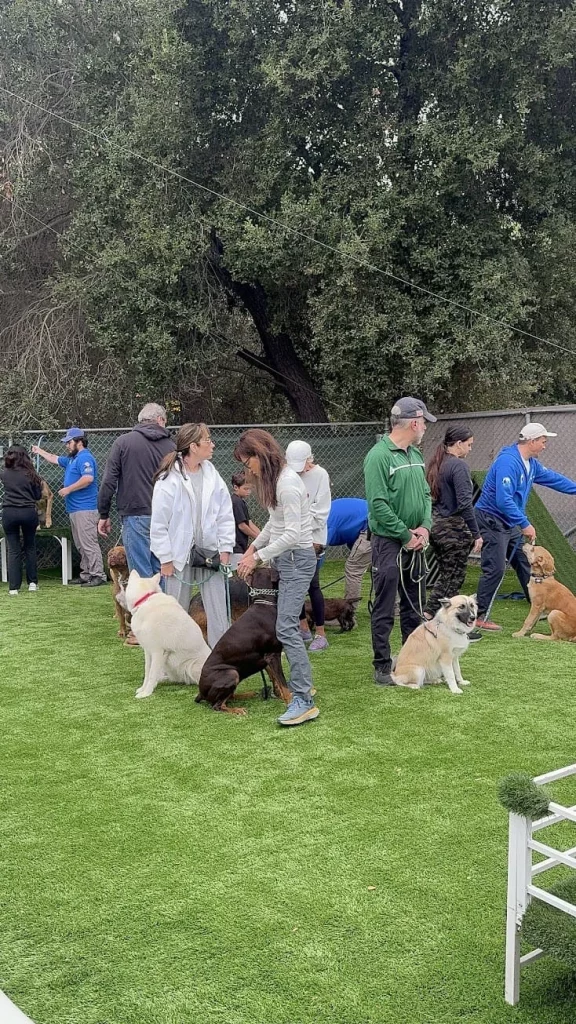
Board & Train
Combines comfortable boarding with structured training to build reliable real-world obedience and better everyday habits.

Puppy Training
Builds a strong foundation through house training, bite inhibition, socialization, and basic obedience.
Obedience & Behavior Modification
Addresses reactivity and challenging behaviors through structured training, trigger management, and reliable real-world obedience.

Daycare & Grooming
Combines supervised daytime activity with professional grooming and bathing services to keep your dog comfortable, active, and well cared for.
What Dog Parents Are Saying


 Trustindex verifies that the original source of the review is Google.
 Trustindex verifies that the original source of the review is Google.
 Trustindex verifies that the original source of the review is Google.
 Trustindex verifies that the original source of the review is Google.
 Trustindex verifies that the original source of the review is Google.
 Trustindex verifies that the original source of the review is Google.
 Trustindex verifies that the original source of the review is Google.
 Trustindex verifies that the original source of the review is Google.
 Trustindex verifies that the original source of the review is Google.
See Exactly What Boarding & Training Costs
Boarding rates, Board & Train packages, and add-ons — all clearly outlined.
Frequently Asked Questions
Everything you need to know before your dog’s first stay or Training Assessment.
Have questions? Give us a call
+1 888-818-1622
What causes behavioral problems in dogs?
Behavioral issues can develop from many factors, including fear, anxiety, genetics, past experiences, lack of socialization, stress, or environmental triggers. A professional assessment helps identify the reasons behind your dog’s behavior.
Is behavior modification different from training?
Yes. Traditional training often focuses on obedience and commands, while behavior modification addresses emotional responses, triggers, fears, and deeper behavioral challenges.
How long does behavior modification take?
The timeline depends on the dog’s behavior, history, triggers, environment, and consistency of training. Some dogs may show progress quickly, while others require a longer structured approach.
Can behavioral issues be cured or just managed?
Many behavioral issues can improve significantly with the right approach, but some dogs may require ongoing management. The goal is to create safer, more predictable behaviors and improve quality of life.
Is my anxious or reactive dog dangerous?
Not necessarily. Reactivity and anxiety do not always mean a dog is dangerous. A professional evaluation helps determine what is causing the behavior and what training approach is appropriate.
Have Questions? Give Us a Call
+1 888-818-1622
Ready to Start Your Dog’s Training Program?
Have questions about our training programs? Fill out the form below and our team will get back to you shortly.